Stranger Things Stuns With Season 5
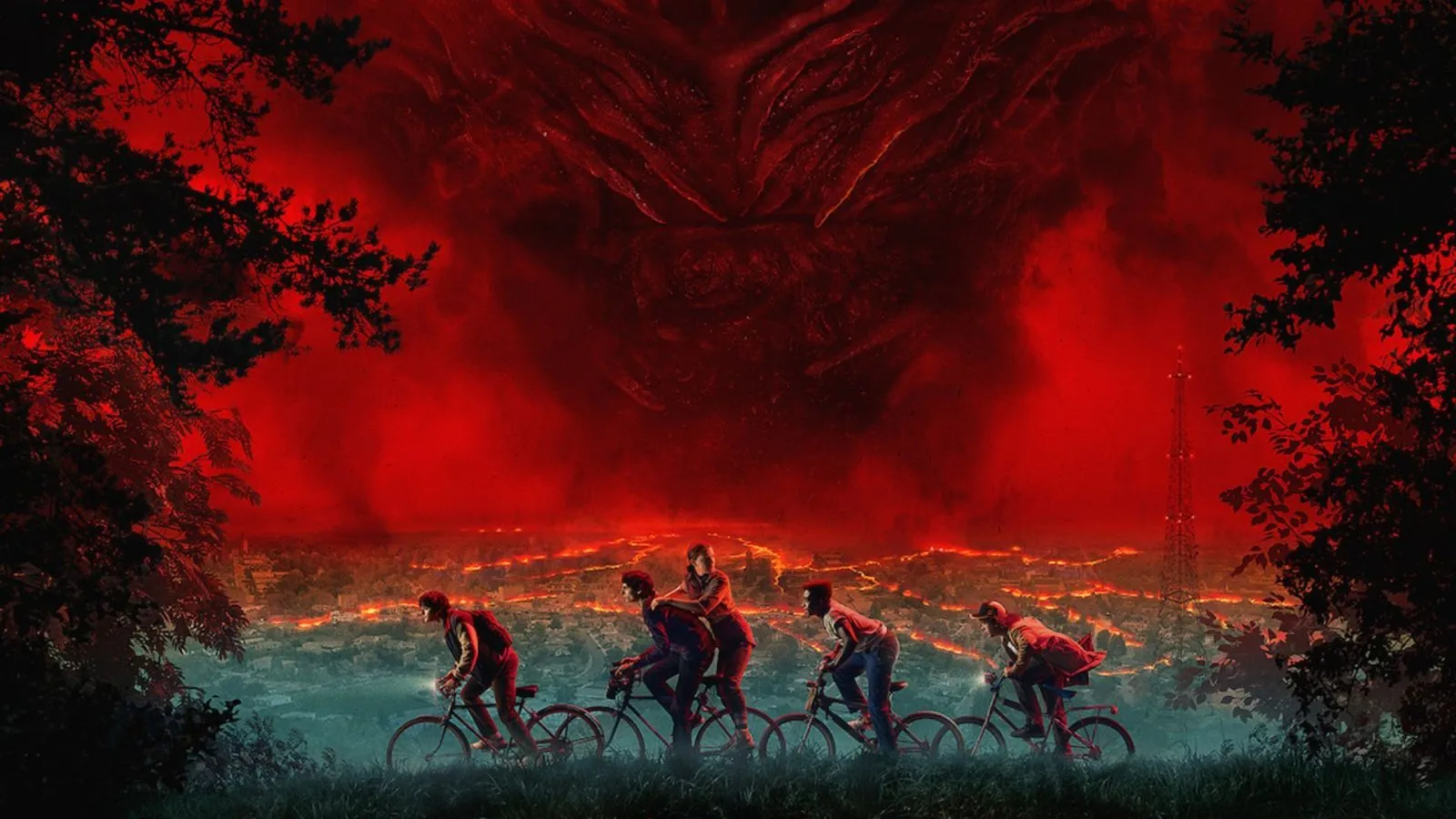
Stranger Things might be inching towards its conclusion but Netflix is making sure that the suspense lasts just a little longer by dropping the season 5 episodes in batches. Want to know when you can watch the volume 2 episodes, as well as the series finale, in Hong Kong? Here’s the full episode release schedule for Stranger Things season 5, along with its plot and cast details.
The final chapter of Netflix’s biggest fantasy sci-fi series is being rolled out in three volumes. With Hawkins on the brink of collapse and Vecna still lurking in the Upside Down, anticipation has never been higher.
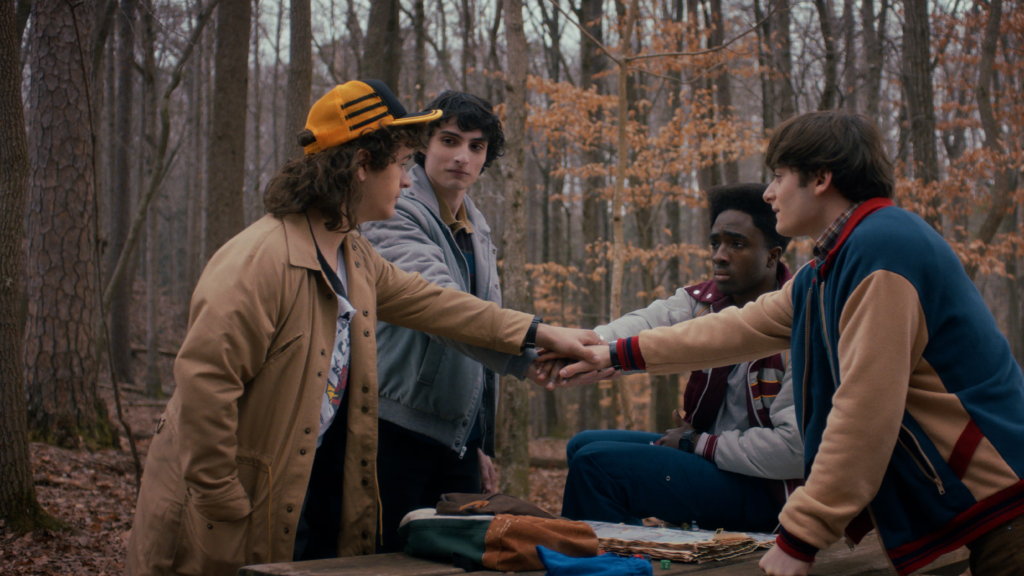
Speaking to Tudum, co-creator Ross Duffer shared, “I think what’s unique about this season is that it starts a little bit in chaos because our heroes ultimately lost at the end of season 4.”
So, get your popcorn ready and prepare to revisit Hawkins, as the group of friends goes all out against Vecna, one last time.
Time’s up for Stranger Things. The fifth and last season arrives almost three-and-a-half years after a fourth run that felt like a finale, not least because it seemed the kids had grown up. Having originally aped beloved 1980s films where stubbornly brave children avert apocalypse, the franchise now starred young adults and had adjusted plotlines and dialogue accordingly. Life lessons had been learned. Selves had been found. Adolescent anxieties – as personified by Vecna, the narky telekinetic tree-man who rules a parallel dimension adjacent to the humdrum town of Hawkins, Indiana – had been put aside.
But Stranger Things now belatedly returns, with the cast all visibly in their 20s. This is a problem. The whole point is that it’s fun to watch kids outrun monsters by pedalling faster on their BMX bikes, or ignoring their mum calling them to dinner because they’re in the basement with their school pals, drawing up plans to bamboozle the US military using pencils, bubblegum and Dungeons & Dragons figurines. If everyone looks old enough to have a studio apartment and a stocks portfolio, none of the above really flies.
The four new episodes – three more are coming for Christmas, with a further, definitely final one at New Year – get around this by shrinking the Stranger Things world. We don’t leave Hawkins, unless it’s to visit nightmare mirror town the Upside Down, or the mind-palace realm made of memories that Vecna takes his victims to if he really wants to mess with them. Even Hawkins as a location hardly exists: parents, teachers and the general populace no longer appear unless entirely necessary. There’s just the sinister government research facility (now heavily guarded by soldiers) where all the trouble started, and the main group of characters, scheming to break into the Upside Down and defeat Vecna for good – a quest that has obliterated all other concerns.
Our friends have become ageless, their core characteristics trapped in amber. Gadgetty herbert Dustin (Gaten Matarazzo), fast-talking free spirit Robin (Maya Hawke), intense psychic warrior Eleven (Millie Bobby Brown) and determined nerd Mike (Finn Wolfhard) all continue to do their thing. Pals such as Lucas (Caleb McLaughlin) and Jonathan (Charlie Heaton), who have never really found their thing, are still welcomed along for the ride, as are the token adults in the group, Joyce and Hop (Winona Ryder and David Harbour).
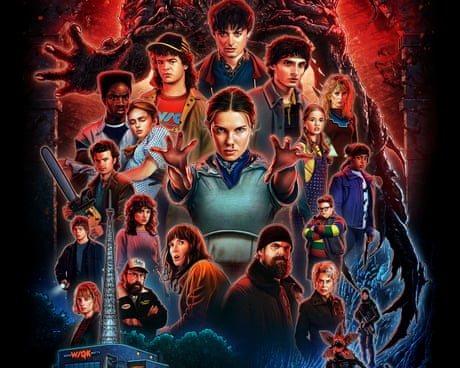
With each of the four episodes running on from the previous one, we have a five-hour action-comedy-horror movie, where each part of the story is luxuriously stretched. Episode one is all set up; episode four is a solidly thrilling 90 minutes of flame-throwing, bullet-dodging spectacle that makes good use of what looks like a virtually limitless effects budget, and which culminates in a moment that will have fans standing on their chairs and hollering joyfully.
Along the way, the gang set traps, crawl through tunnels, recruit spies and fiddle with radios, encouraging and arguing with each other as they improvise their way out of every impossible situation just as they always have. This year’s reference points, in lighting, composition or plot, include The Exorcist, Home Alone, Back to the Future, Little Red Riding Hood, The Great Escape, Jurassic Park and the cult 1985 French-Canadian animated movie The Peanut Butter Solution – but the overriding influence is Stranger Things itself. It has successfully patchworked its own unique genre vibe, a formula that can be profitably re-run, at least once more.
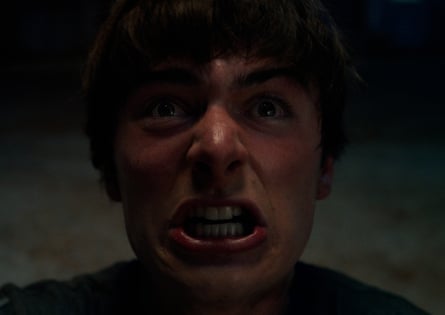
And, crucially, character development is not totally absent. Much of the action is driven by budding investigative journalist Nancy (Natalia Dyer), who is prompted to find her inner fire when an older man pats her on the shoulder, calls her “sweetheart” and tells her not to worry about difficult adult things. Then there’s the long-awaited blossoming of Will (Noah Schnapp), who was Vecna’s first victim in season one, episode one. As it succumbs to the instinct to end by returning to the beginning, Stranger Things opens season five by revisiting that moment, then works to turn Will, who for ages has been a frustratingly pale, baleful presence defined by his trauma, into the most important member of the ensemble.
Will is secretly gay, which could be just another coming-of-age tribulation, but writers/directors the Duffer Brothers have always treated their creations with more thought and sensitivity than you might expect a billion-dollar retro fantasy thriller to allow. Now, in Will, they find not just one more journey of self-discovery to embark on, but the show’s most moving one of all. Stranger Things definitely needs to switch off its boombox, hang up its catapults and admit it’s too old for these capers, but it’s worth indulging it one last time.
The first four seasons of Netflix’s smash-hit streaming series Stranger Things were genuinely thrilling, funny, and frightening armrest-grabbing television that may have defined the era of binge-worthy TV. The Duffer Brothers’ creation set the gold standard for mainstream popcorn escapism, elevating the genre into genuine art or at least an art form defined by its audience. These freaks and geeks we have welcomed into our homes have taken us on a thrilling and terrifying ride.
However, Stranger Things’ final season has, unfortunately, been a massive disappointment. Not because the series won’t be satisfying for its fervent fanbase, but because it recycles the same thrills and chills on auto-repeat, lacking new ways to put these beloved characters on their toes and settling into an unmerited mythology that skips over proper setups. The characters now feel redundant, the world-building has grown tiresome, and the era’s unique themes that once made the show stand out are all but a distant memory.
Stranger Things’ final season hasn’t reinvented itself as much as it’s found itself stuck in predictability, still clinging to the nostalgia from better seasons past.
The fifth and final season picks up in the fall of 1987, a few months after the events of the fourth season, when the gates of Vecna’s (Horizon: An American Saga’s Jamie Campbell Bower) hellish realm have opened in Hawkins, Indiana. The group is trying to live their everyday lives, but behind the scenes, they’re hiding Eleven (Millie Bobby Brown) from the American military while planning to kill One. Helping to hide and train Eleven are Hopper (Thunderbolts’ David Harbour) and Joyce (Beetlejuice’s Winona Ryder), her legally adoptive parents.
Of course, this is all happening around the time of Will’s (Noah Schnapp) disappearance, highlighting the Duffer Brothers’ penchant for circular storytelling. However, the team is still down one person, as Max (The Whale’s Sadie Sink) remains in a coma, with Lucas (Caleb McLaughlin) always by her side. Dustin (Gaten Matarazzo) is still mourning the loss of Eddie (Joseph Quinn). There is also the ongoing love triangle involving Nancy (Natalia Dyer), her boyfriend Jonathan (Charlie Heaton), and Steve (Joe Keery).
The group begins an operation to send Hopper into the Upside Down to kill their nemesis, who is hell-bent on ending the world. With Robin (Wildcat’s Maya Hawke) running the local radio station and sending coded messages, Hopper sneaks onto a military transport—only to find himself in immediate danger. Meanwhile, as Mike (It’s Finn Wolfhard) tries to figure out why his little sister Holly is talking to an imaginary friend, she is taken by Vecna, who uses her as bait to draw Eleven out to save her.
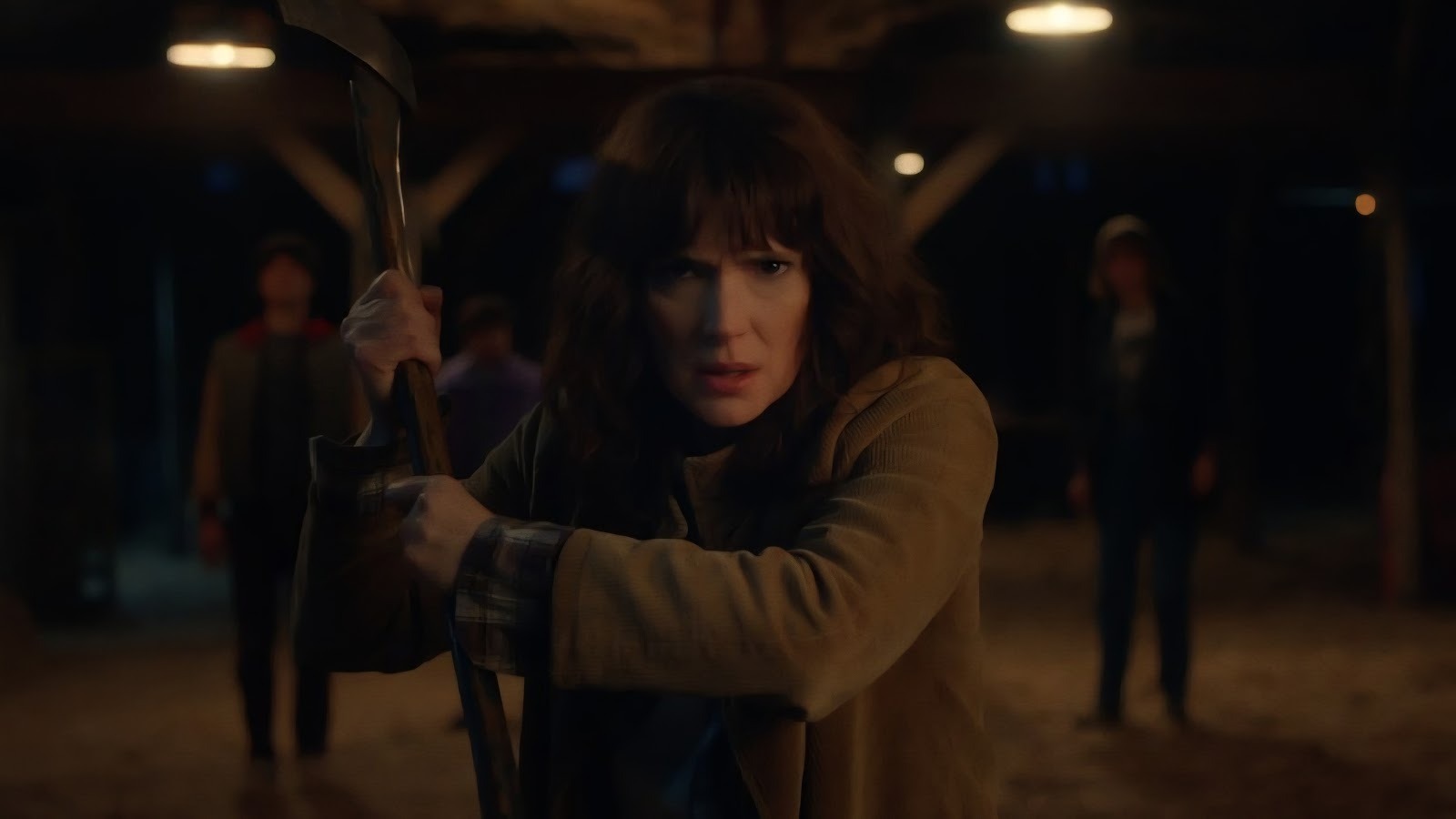
Stranger Things’ fifth and final season suffers from a phenomenon called the Mystery Box effect, which, frankly, was an issue in Volume Two of Season Four’s pendulum chapter. When Vecna was revealed at the end of Episode Seven, it was a jaw-dropping admission. We knew most of the characters would survive, and everyone knew Eddie was a knockoff character. Now, in the final season, making Holly (Nell Fisher) older and using a character who has hardly had a presence as a significant driving plot point is highly contrived.
The show suffers from Netflix endgame fatigue, which is very real, and the loss of complexity results in only two simple outcomes: either the villain or the hero wins. The other issue is that all the episodes are over sixty minutes long, so there is a lot of narrative fluff in between. It doesn’t help that most of these kids lack the skills to play three-dimensional adult characters, which is the real reason Wolfhard and Schnapp were kept hidden for most of last season. There’s improvement, but they need to be insulated by the large cast to make their scenes work.
This, of course, will happen with any thriller as popular as Stranger Things, especially a show with so much mystery, character development, and world-building. For example, another series with a fervent fanbase, Lost, collapsed under the pressure of creating endless mysteries. With the Duffer Brothers’ mystery, however, the story leads to a simple, unsatisfying endgame that lacks complexity.
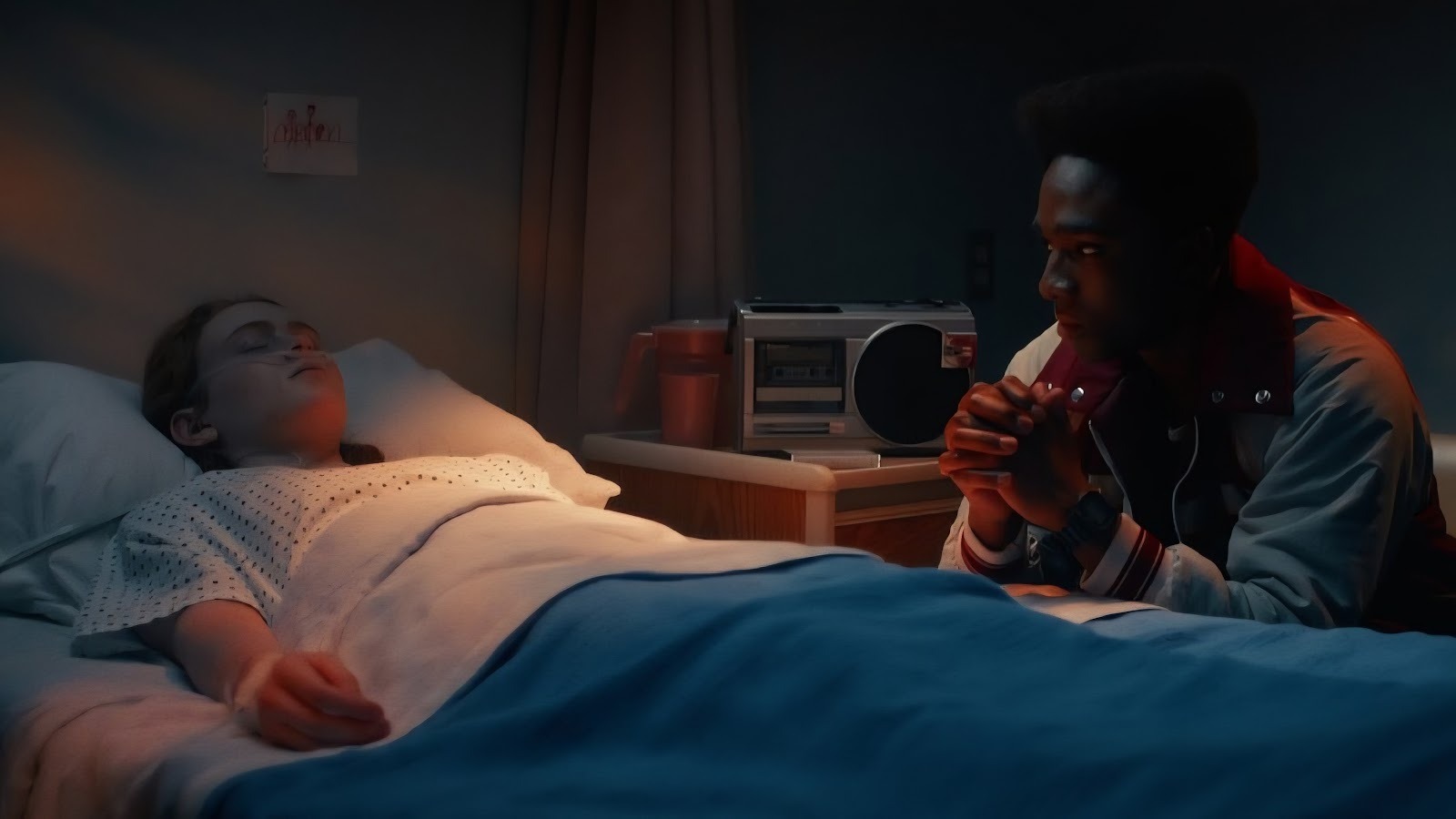
Even with the addition of Linda Hamilton (The Terminator) as Dr. K, running a military base in the Upside Down feels out of place and out of character for a series that takes significant jumps without showing enough patience, taking narrative leaps past its audience without earning those choices. Of course, the series is exciting enough in spots, displaying some glorious special effects that lead to a few very scary scenes. But once you’ve seen one Demigod, you’ve seen them all.
However, the twist at the end of episode three, titled “The Turnbow rap,” had a fun moment that almost had me recommending the first batch of episodes. Of course, only the first four episodes of Stranger Things’ fifth and final season were screened for most critics. So it is impossible to know where the show is headed or how it will end satisfyingly. Frankly, that is Netflix’s fault for not screening all the episodes for critics and not trusting their product. Based on the limited number of people who were given screeners, I can now see why.
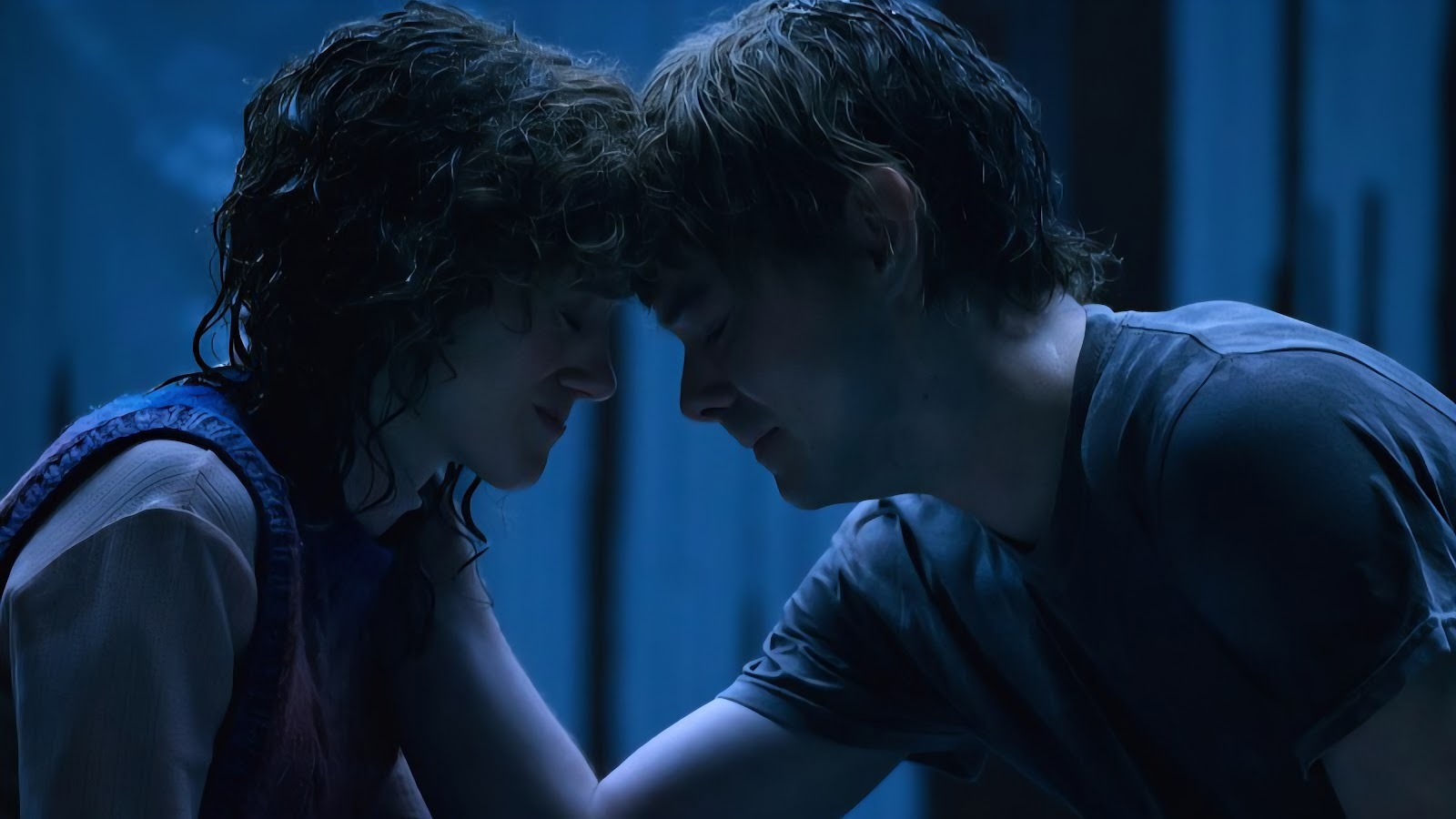
It’s been three and a half years since the most recent season of “Stranger Things” kicked off in May 2022. The first episode of the hit series’ fifth and final installment — delayed by dual Hollywood strikes and the mounting production value of a show that’s ballooned from surprise breakout to blockbuster franchise — opens in the fall of 1987. That’s 18 months after the events of Season 4, which concluded with archvillain Vecna (Jamie Campbell Bower) rupturing the metaphysical border between our reality and the alternate dimension known as the Upside Down, and four years from Season 1, which kicked off in November 1983.
Which means that the real-life gap between two individual seasons of “Stranger Things” is dangerously close to that of the entire canonical span of “Stranger Things.”
That factoid is absurd enough on its face, illustrating the escalating tax on viewers’ patience from a medium once defined by consistent, predictable output. (“Stranger Things” is far from the sole culprit: “Severance,” another streaming-native genre sensation, is a prime example.) But it also sums up the challenge facing the brainchild of twins Matt and Ross Duffer as their show steers into its home stretch, an eight-episode season broken up into three chunks, with the first dropping on Thanksgiving eve. “Stranger Things” is a story about children — and, more than that, the innocence of childhood, pitting a scrappy gang of bike-riding Dungeons & Dragons nerds against misguided adults who mess around with forces they don’t understand — that’s gone on long enough to see its cast grow up, with all the tensions that come with that glaring contrast.
The list of data points is long. Millie Bobby Brown, who broke out as the telekinetic, “E.T.”-esque Eleven, is now the married mother of an adopted baby girl. Voices have dropped; IMDb pages have lengthened. For some of the series leads, the time between their casting and the finale’s premiere will encompass more than half their lives. But what matters to this reviewer is how these changes manifest in the show — or rather, don’t. The truth is that “Stranger Things” itself has not reflected its stars’ obvious maturation with an accompanying complexity. All of “Stranger Things” is an exercise in nostalgia. In Season 5, the show now seems to pine not just for the neon hues and synth-driven pop of the 1980s it conjures so evocatively, but for a simpler time in its own run that can’t be brought back, no matter how high the budget. Though if anything, “Stranger Things” has only gotten less rough-edged over time. Remember when Hopper (David Harbour) was an alcoholic who smoked?
The four episodes that comprise Volume 1 unsurprisingly walk back the Season 4 cliffhanger. Hawkins, Indiana, has not turned into a hellscape of Demogorgons and slimy vines. Instead, the town has been put under military quarantine, occupied by the same foolhardy industrial complex that started this whole mess in the first place. With Matthew Modine’s Dr. Brenner now dead, the deep state’s latest ambassador is Dr. Kay (Linda Hamilton), a scientist and officer who commands an entire base constructed within the Upside Down. Uncle Sam has stapled over most of Vecna’s rifts with crude metal plates, but left just enough open to use for his own ends.
This human-made bubble makes Season 5 more geographically focused than its predecessor, which put thousands of miles between groups of the protagonists. That pays off in more concise run times than the bloat of Season 4, yet the return to Hawkins underlines the familiarity of the setups. In lieu of a mall, this year’s throwback locale is a radio station staffed by lovable burnouts Robin (Maya Hawke) and Steve (Joe Keery), who use the airwaves to send coded messages to their compatriots. The team once again splits up in the name of completing a sequence of self-assigned side quests before inevitably reuniting later in the season. Steve, his ex-girlfriend Nancy (Natalia Dyer) and her current boyfriend Jonathan (Charlie Heaton) continue to litigate their series-long love triangle. The same pieces are on the board, in only slightly different configurations.
Season 5 shows us more of the Upside Down, and at a greater scale, than “Stranger Things” ever has before. Hopper embarks on his regular patrol of its terrain to search for Vecna, who’s disappeared since he was injured in the Season 4 finale, and his adopted daughter Eleven joins soon after; the pair remain there for the duration of Volume 1. These scenes showcase the production’s increasing technical abilities, realizing this other world more immersively than ever. But after last season’s revelation that Vecna governs the Upside Down and controls its inhabitants via hive mind, Season 5 hasn’t yet added to our understanding of the realm, either in mechanics or as metaphor. Only the scope changes, not the approach. The “Stranger Things” version of evolution is that our heroes now use radio waves, not D&D creatures, as their analogy of choice for sussing out how the Upside Down functions where science could not. Once, these frameworks were endearing instances of middle-schoolers making sense of the nonsensical. Coming from actors mostly old enough to be college graduates, the relative haziness of the world-building starts to peek through.
To the extent “Stranger Things” conveys its main characters’ expanding emotional lives as they plunge ever further into adolescence, it’s through Vecna’s original prey Will Byers (Noah Schnapp), who comes to terms with his homosexuality in tandem with his enduring connection to the Upside Down. Will bonds with Robin, the only other queer person he knows, over his fear and uncertainty. Robin’s advice mostly boils down to “be yourself” platitudes, yet Hawke — who quite literally has stardom in her blood — sells them.
But in lieu of giving a similar treatment to the rest of the Hellfire Club, “Stranger Things” shows its hand by effectively swapping them for a new generation of kids who have the cuteness factor they used to. Holly Wheeler (Nell Fisher), the baby sister of Nancy and Mike (Finn Wolfhard), gains new prominence as the latest Hawkins resident caught in the clutches of the paranormal. Her classmate Derek Turnbow (Jake Connelly), derided by his peers as “Dipshit Derek,” provides some of the comic relief Dustin (Gaten Matarazzo) once did. It’s no coincidence Fisher and Connelly are basically the same age their older castmates were back in 2016, when “Stranger Things” first set the world on fire. Holly’s interpretive lens of choice is “A Wrinkle in Time,” not a fantasy role-playing game, but she’s another kid confronting the unknown using the tools at her disposal, with grown-ups more a hindrance than a help.
As it hurtles toward a final showdown with Vecna, “Stranger Things” is resetting the clock rather than riding its forward momentum. The Duffers have always worn their influences with pride, and the specters of Steven Spielberg and Stephen King helped jump-start the series into a phenomenon. But in its last hours, “Stranger Things” remains primarily pastiche, so indebted to inherited archetypes (mad scientist, reformed bully) and references (The Clash, Peanut Butter Boppers) that its main cultural impact comes from extratextual elements like casting and the ascendance of Netflix. By declining to enrich its characters as they age, “Stranger Things” traps itself in arrested development. When you get bigger without going deeper, you end up stretched thin.


Post Comment